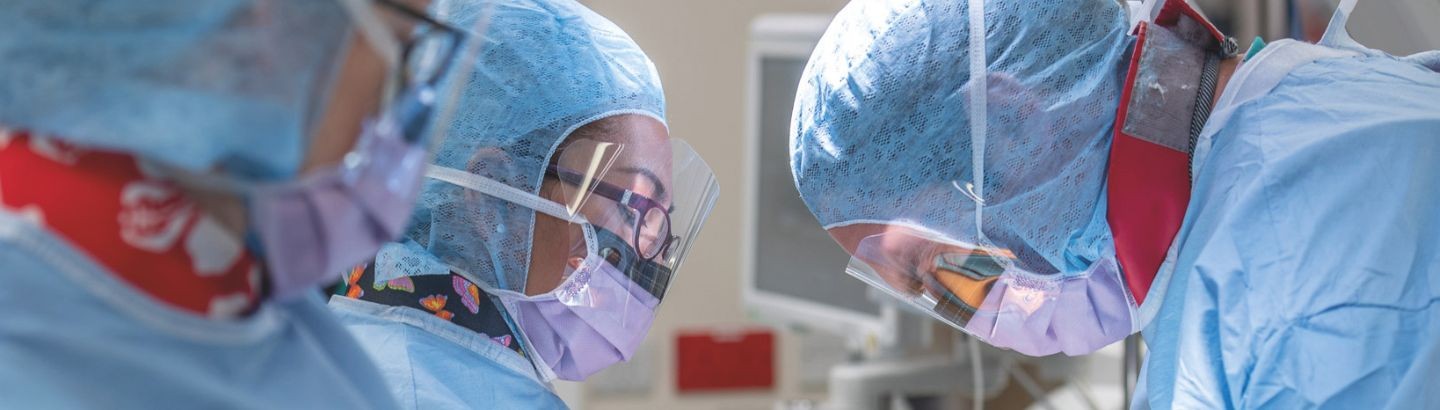
Surgical theatres are special hospital rooms where operations take place.
They are clean, safe, and designed to help doctors and nurses work carefully.
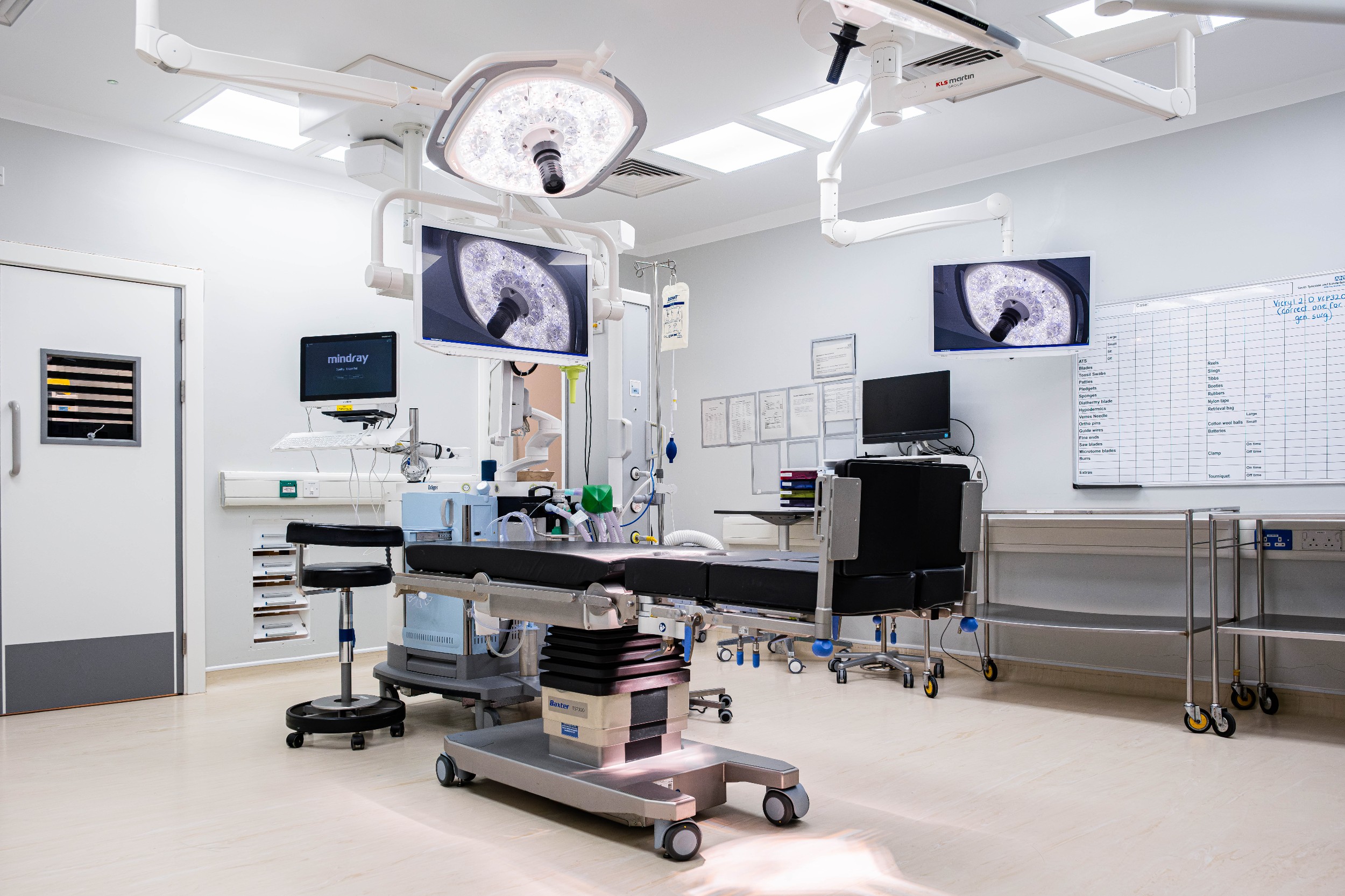
They are bright and have large lights that help the team see clearly. They have machines that check breathing, heartbeat, and blood pressure.
They have a strong, clean table where the patient lies during the operation. There are tools that are kept sterile so no germs spread
This is one of our theatres:
What are our theatres used for?
Inpatient surgery is an operation that is planned ahead of time and is not an emergency. It is likely to be a bigger operation that requires you to stay in hospital until you are fully recovered.
It is done to help improve your health, comfort or quality of life.
Because it is planned, you and your surgical team can choose a date, talk through the steps and make sure you are fully prepared.
Day surgery is an operation that you can go home from on the same day.
You come to the hospital, have your procedure and then rest for a short time before leaving.
Day surgery is used for many common treatments. It allows you to recover in the comfort of your own home while still getting safe, high‑quality care.
Emergency surgery is an operation that needs to be done quickly to treat a serious injury or illness.
It cannot be planned ahead because the problem must be fixed right away to keep you safe.
In most cases you will be kept in hospital until you are fully recovered.
Where are our theatres?
We have 22 theatres at Sunderland Royal Hospital. They are across 3 floors - C Level, D Level and F Level.
C Level
C Level has 8 theatres. They cover a range of surgical specialities, including general surgery, ENT, OMFS and weight loss surgery. 2 of the theatres on C Level are digital theatres and 1 is home to a state-of-the-art vascular theatre. Our emergency theatre is on C Level too.
D Level
D Level has 9 theatres. They cover orthopaedic trauma, planned orthopaedic surgery and gynaecology. 5 of the theatres on this level have special systems for joint replacements.
There is also a special block room on D Level in the theatre area. This room is used to give regional anaesthesia for surgery on the arm, leg, hip, knee and hand, as well as other types of surgery when needed. The block room also helps the team work more smoothly on planned surgery lists because patients can be prepared at the same time.
There are also 2 more theatres in another part of the hospital. These theatres are for urology surgery and include equipment for advanced robot‑assisted surgery.
F Level
On F Level there are 2 theatres. These are for paediatric (children's) surgery.
We have 6 theatres. Each of these has their own anaesthetic room. They cover orthopaedic surgery, general surgery, gynaecology surgery and day case urology surgery.
We also have a minor operation theatre which is mainly used for dental surgery.
We have 2 theatres at Sunderland Eye Infirmary. Here we perform:
- emergency eye surgery
- inpatient eye surgery
- cataract day‑case surgery
- oculoplastic surgery (eyelids, bones around the eye and tear ducts)
- glaucoma procedures
- nurse-led minor operations and injections
Our new Eye Hospital in Sunderland will have more theatre space.
There is also a 16 station dialysis unit and a day case theatre.
Listen to our episode of Our People Podcast to find out more about digital theatres.
What will happen when I have an operation?
You'll be asked to attend a pre-operative assessment. This is an appointment with a nurse, either in person or as a video or telephone call. If it's in person, where you go will depend on where you are having your operation.
We'll ask you questions about your:
- health
- medical history
- home circumstances
If you need to come into hospital we may do some tests. This is to check if you have any medical problems that might need to be treated before your operation, or if you'll need special care during or after the surgery.
The tests you have will depend on what operation and the kind of anaesthetic you're having. They might include tests for infection, blood tests, urine tests and a pregnancy test for women.
This assessment will usually happen one or more days before your operation.
Make sure you know the results of any previous tests, as well as all the medicines, vitamins and herbal supplements you take.
You'll be given clear information on:
- whether you need to stop eating and drinking in the hours before your operation
- whether you should stop taking your usual medicines before going into hospital
- what to bring with you into hospital
- whether you'll need to stay in hospital overnight and, if so, for how long
The NHS website has some tips about how you can prepare for your surgery. This includes what to pack, thinking about how to get to hospital and hygiene. See this here: NHS Surgery Preparation.
When you arrive at the hospital, you will check in at the reception area. A member of staff will take you to the ward or waiting area, where a nurse will confirm your details and make sure you are ready for surgery. You might change into a hospital gown and remove jewellery or metal items. A nurse or healthcare assistant will check your blood pressure, pulse and temperature.
A member of the surgical team will speak with you to explain the procedure again and answer any questions you have. An anaesthetist will also talk to you about the type of anaesthetic you will receive and check your medical history. When everything is ready, you will be taken to the theatre area on foot or on a trolley.
In the anaesthetic room, the team will help you get comfortable on the trolley. They will attach monitors to check your heart rate, blood pressure and oxygen levels. The anaesthetist will give you the anaesthetic, which may be a general anaesthetic that puts you to sleep or a regional anaesthetic that numbs part of your body.
Once the anaesthetic is working, you will be taken into the operating theatre. The surgical team will clean the area being operated on and cover you with sterile drapes. The operation will then begin. Throughout the procedure, the team carefully watches your breathing, heartbeat and overall safety. After the operation is finished, you will be moved to the recovery area where we will monitor you as you wake up or regain feeling.
After your operation, you will be taken to the recovery area, where nurses and anaesthetic staff will monitor you closely. They will check your breathing, blood pressure, oxygen levels and pain. You may still feel sleepy as the anaesthetic wears off, and this is normal. Once you are fully awake and stable, you will return to the ward or, for day‑case procedures, to a discharge area.
You may have a dressing over the surgical site, and the team will explain how to look after it. You might also have some tubes or drains, depending on the type of surgery, and staff will tell you what they are for and when they will be removed. You will be given pain relief to keep you comfortable, and you can ask for more if you need it.
Before you go home, the team will talk to you about caring for yourself, managing pain, taking medicines and what signs to watch for. They will also explain when you can return to normal activities and whether you need a follow‑up appointment. If you are staying in the hospital, staff will support your recovery and help you get back on your feet safely.
Where can I find out more?
In our theatres there will be:
- Surgeons - they repair, remove or improve parts of your body during an operation
- Anaesthetists - they give patients medicines that help them sleep safely during operations
- Theatre nurses - they support patients and help the surgical team before, during and after operations to help make sure everything runs safely and smoothly
- Operating department staff - they prepare the theatre, support the surgical team and help care for patients before, during and after an operation
These team members work together to keep patients safe and provide the best care.
We might also have other people from time to time like students.
South Tyneside District Hospital
Use the main entrance and take the lift or stairs to:
- the 1st floor for theatres
- the 3rd floor for our pre-operative assessment clinic
Sunderland Royal Hospital
Use any of the entrances to the hospital. Take the lift or stairs to either C Level or D Level and follow signs for theatres. Your letter will tell you what level to go to.
Durham Treatment Centre
This link will give you details on how to get to here: Durham Treatment Centre.
Sunderland Eye Infirmary
Use the main outpatients entrance (entrance B) and follow signs to theatres.
Our senior team in Theatres
Divisional director - Caroline McGrath
Directorate manager - Louisa Robinson
Clinical director - Paula Morris
Matron - Alan Simpson