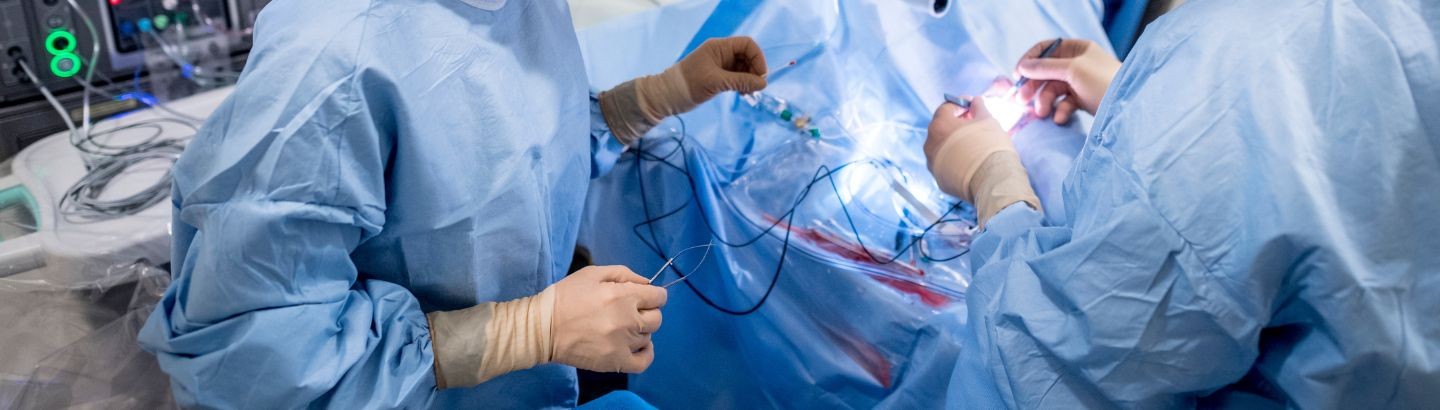
This type of surgery is to do with the parts of the body that help us digest food. Most of the operations we do are by keyhole. We also use robots for more complex cases. Our general surgeons also experts in other areas. These include.
About half of the general surgery we do is urgent and needs to happen straight away. The other half of the operations we do are ones that we plan. Once your GP refers you for treatment with us, we will see you as quickly as we can.
What type of emergency conditions do we treat?
Appendicitis. Your appendix is part of your bowel. If it swells up or gets infected, this causes pain in the lower right side of your tummy. You will need urgent surgery to take it out.
Urgent gallbladder removal. This is when we take your gallbladder out if it is infected or damaged. This can be serious, and we may need to operate quickly.
Urgent hernia problems. If you have a hernia and it gets trapped or loses its blood supply this can be serious. We will need to operate on you quickly if this happens.
Dangerous infections in the tummy. If the lining of your tummy gets damaged or infected it can be serious. It can also be life threatening. You may need surgery so we can take out the infected part.
What type of planned operations do we do?
Hernia repair. A hernia is when a part of the body pushes through tissue where it should not. This can cause pain and other symptoms. Although most hernias will not get better if you do not have surgery, they also will not get worse. In some cases, the risks are greater than the likely benefits. We will talk to you about your options.
Gallbladder removal. If you have gallstones and they keep giving you problems, we may need to take your gallbladder out.
Planned bowel surgery. We do lots of planned surgery on the bowels. You can visit our colorectal page here to find out more.
Bariatric (weight loss surgery). We are a regional centre for this type of surgery. We provide weight loss support and guidance. There are various steps you must follow before we think about surgery. You can find out more here.
What type of treatment will I have?
This depends on your problem.
One of the first things we need to do is diagnose the problem. You will have tests and scans to help us do this.
Most of the surgery we do is keyhole. This means your recovery is much quicker. Most patients come in for a day case procedure and go home the same day
For other things, we may need to do a bigger operation. You will need to stay in hospital for a short while to recover after surgery.
Your specialist will explain which treatment may be best for you, and the benefits and risks.
Who will look after me?
We have a team of consultant surgeons who will lead your care. They work as part of a wider theatre team.
They also work with our specialist nurses, healthcare assistants and the whole ward team, to look after you. You may also see physios and other therapists as part of your recovery.
They are all are experts in what they do. Together, we will agree a treatment plan and work together to care for you.
Where will my treatment take place?
If your GP, ambulance staff, or our ED team think you need urgent help, we will see you first in Same Day Emergency Care. Our surgical team will see and assess you.
If you do need surgery, we will see you in our Emergency Surgical Assessment Unit (ESAU) on ward C31. This is at Sunderland Royal Hospital. You may need to go straight to surgery.
You surgery will take place at South Tyneside District Hospital or Sunderland Royal Hospital.
If you need to stay in hospital, you will be on one of the following wards:
- Ward 9 (Surgical Centre) - South Tyneside District Hospital
- Ward C30, C31 or C32 - Sunderland Royal Hospital
We have Day of Surgery Admissions Unit (DOSA) in Sunderland. This is where patients come on the day of their planned operation. In South Tyneside, you will go to the Surgical Centre.
We also do some day case procedures at Durham Treatment Centre.
We run clinics in:
- Durham Treatment Centre
- South Tyneside District Hospital
- Sunderland Royal Hospital
Finding us
For a full list of our Trust locations (click here).
Your appointment letter will let you know which location to go to.
Where can I find out more?
Our senior team in General Surgery
-
Divisional Director- Caroline McGrath
-
Associate Divisional Director – Caroline Bell
- Clinical Director - Mr Will Carr
- Directorate Manager – Susan Askew
- Matron - Jonathan Watters
Mr Neil Jennings is a Consultant General Surgeon and Deputy Medical Director at STSFT

Mr Will Carr is a Consultant General and Bariatric Surgeon and the Clinical Director for our General Surgery services