For people with a learning disability, coming into hospital can be a worrying experience. We want you to have a good experience.
This page tells you about the help and support available to you.
- Hannah Walden. She is an Learning Disabilities Acute Liaison Team Manager. This means she manages the learning disabilities team that works in the hospital.
- Abbie King. She is a Learning Disability Acute Liaison Nurse. She works with people with learning disabilities in hospital.
- Faye Rowley. She is a Community Learning Disability Specialist Nurse. This means she works with people with learning disabilities in places outside of the hospital.
- Anna Mackenzie. She is a Clinical Educator. This means she teaches people in the hospital how to best care for people with learning disabilities.
There are lots of things we do to help you if you have a learning disability. This includes:
- Helping you while you're in hospital
- Supporting you, your family and your carers
- Giving you information that's easy to read and understand
- Making sure you are involved in making decisions about your health
- Making sure you get fair access to care and support
- Teaching our staff how to best care for you and your needs
- Helping people understand what it's like to live with a learning disability
- Helping staff know about your reasonable adjustments and what they can do to help
- Listening to feedback and making sure we do things better
Learn more about what we do
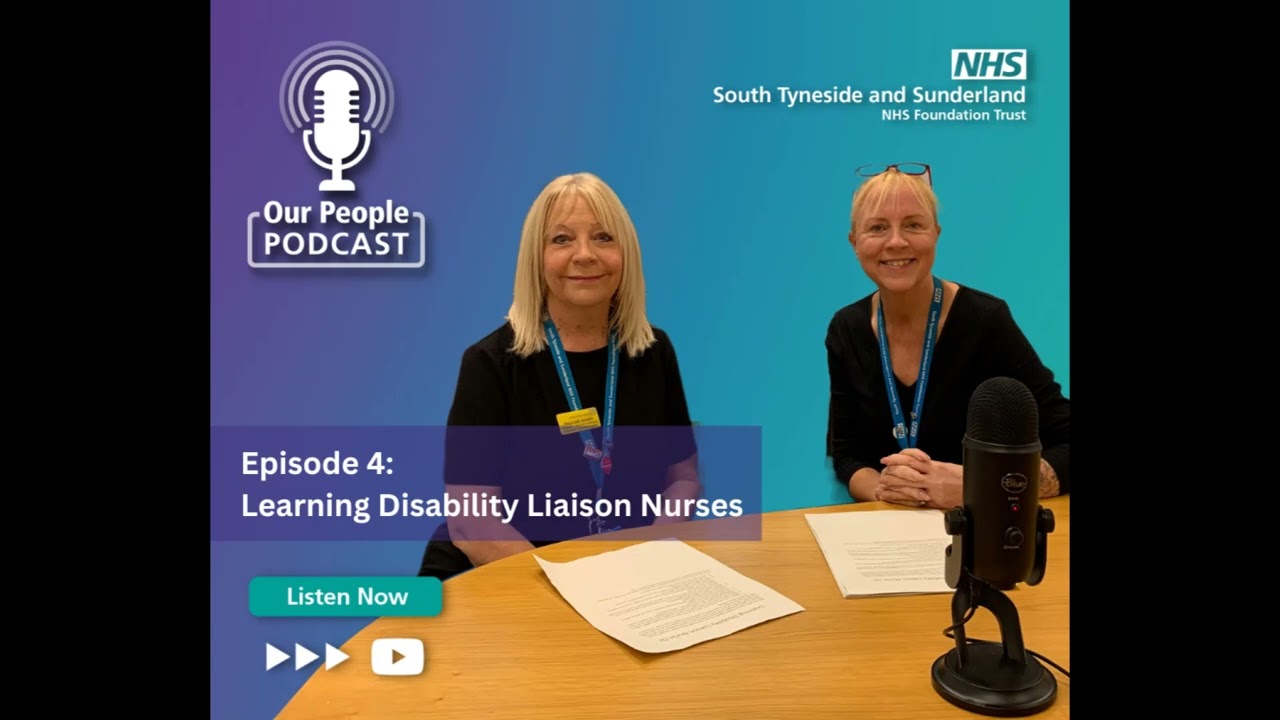
We have a podcast. It is called Our People Podcast. You can listen to the learning disabilities episode by clicking play on the video below:
What else might I need to know?
We need to make it easy for people with a disability to use our services. This is called making reasonable adjustments. Everyone with a disability has the right to reasonable adjustments.
Reasonable adjustments can be simple changes made by one doctor or nurse. Or they can be more complex and need many teams to work together.
They are different depending on the person. Everyone has different needs.
The Health and Care Passport is a document for people with a learning disability. You bring it with you when you come to hospital.
It helps staff understand more about you.
It has information like:
- How best to talk to you
- Things you like and don’t like
- What makes you worried or upset
- What help you might need at home
When you come to hospital you should share it with staff. Remember to take it home with you when you leave. It is your document to keep.
It needs to be updated if there are any changes. This might be things like something new that makes you worried.
We use the Health and Care passport that looks like this:
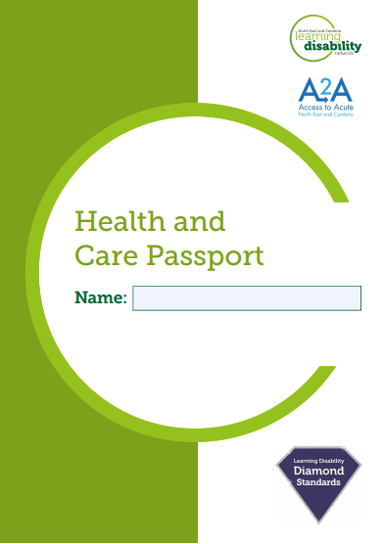
Other hospitals use other passports. It doesn’t matter which one you bring. The important thing is you share it with staff.
You can download a passport by clicking this link.
It can be hard when the person you care for is in hospital. You might want to still care for them. We will help you be as involved as you want to be.
As a carer you can ask for a Carer Passport. This helps you in different ways including:
- Lets people know you are a carer
- Helps you to support the person you care for while they are in hospital
- Gives our staff information about the patient and how you support them
- Raises awareness of carers and how important they are to our patients
- Helps make sure that we help and care for our patients in the best way
You can find out more by clicking this link: Carer Passport
Autism Mind can give you advice if you are autistic and coming in to hospital.
There are different ways to contact Autism Mind:
- By telephone. Call 0191 570 0047.
- By text. Send a message to 07800 005 228.
- By email. Send an email to contact
@autismmind.com - On their website. Click here to visit the website.
Autism Mind is open Monday to Friday, 9am to 5pm.
You can also use an Autism Passport. Click this link to download your Autism Passport. Fill it in and bring it to hospital with you.
Where can I find out more?
- Ambitious about Autism National Charity for Autistic Children and Young People
- AutismAble
- Autism in Mind Autism Support, Me, Myself & Autism
- Changing Places Toilets
- Downs Syndrome Association
- Downs Syndrome UK – DSUK
- Healthwatch Sunderland
- Learning Disability & Autism Services CNTW NHS Foundation Trust
- Learning Disability Matters
- Mencap
- National Autistic Society
- North East Ambulance Service Learning Disability Zone
- North East & Cumbria Learning Disability Network – NECLDN
- Sunderland Carers Centre
- Sunderland People First - A Voice for Change
- Voiceability Advocacy Service
- Your Voice Counts