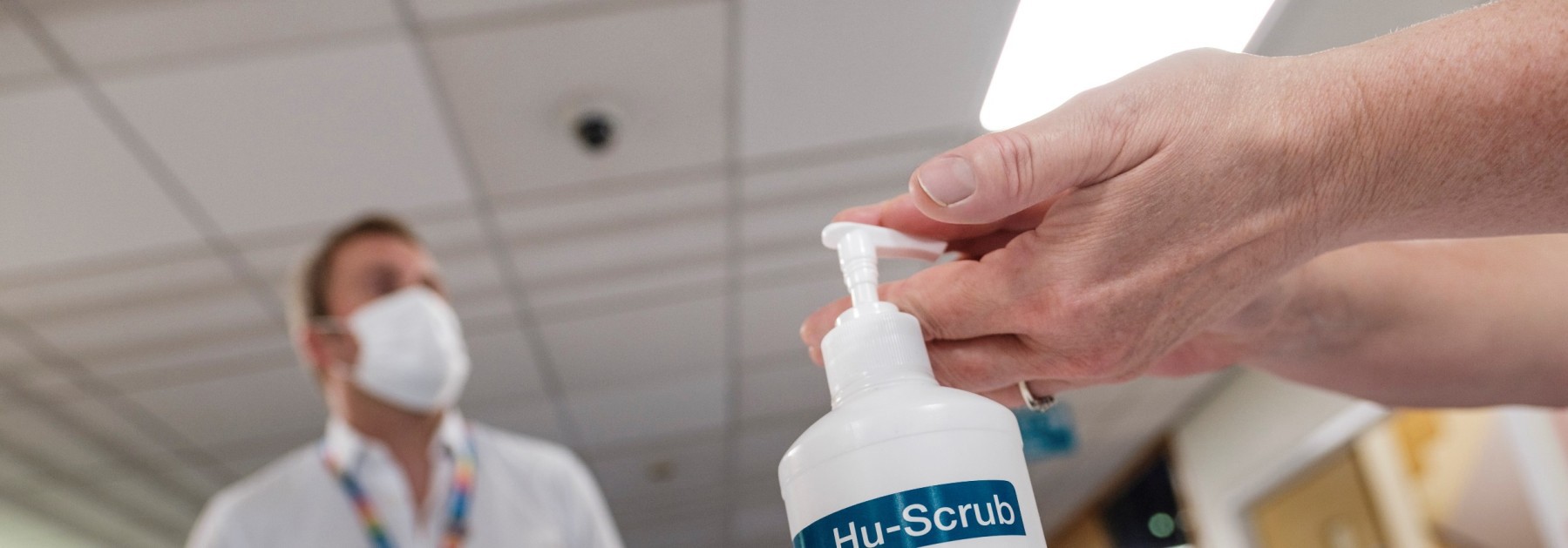
It’s really important that our patients stay healthy and well. 

While patients are in hospital they will be more at risk of getting an infection.

Everyone has a part to play in stopping the spread of infection and keeping our patients healthy and well. Patients, staff and visitors. 

We must work together to help reduce the risk of infection in hospital. Infections are caused mainly by bugs or germs called bacteria or viruses. 

If you come to hospital you should let staff know if you have any infections. You should also tell them if you have stayed overnight in another hospital any time in the last 12 months. This includes a hospital in the UK or in a different country. 

There might be times where wards are closed because of infections. Information about this will be shared as much as possible. This might be on: 

  • Our website
  • Our social media channels
  • Signs at the entrances of wards and departments
DO 

  • Clean your hands before and after visiting a ward or department. Alcohol gel or soap and water are available for you to use. There are posters showing you the best way to do this
  • Clean your hands after visiting the toilet 
  • Clean your hands before you eat and drink with a wet wipe or soap and water. You will be given a wipe at meal times
  • Stay in your room if you’re asked to
  • Let us know if you feel unwell or experience symptoms of infection. For example diarrhoea or vomiting 
  • Keep any cuts covered with a waterproof dressing

DON’T 

  • Share personal items with other patients. This might spread infections
  • Leave your toiletries in a shared bathroom. Other people might use them 

DO

  • Clean your hands before and after visiting a ward or department. Alcohol gel or soap and water are available for you to use. There are posters showing you the best way to do this
  • Clean your hands after visiting the toilet 
  • Make sure there are no more than 2 people visiting a patient at once. You might need to speak to family and friends to stagger your visits
  • Let a member of staff know if the person you are visiting has any concerns about infections
  • Leave the bedside area if staff ask you. This might be so we can clean the area
  • Follow any advice you’re given specific to the ward or department you’re visiting

DON’T

  • Visit if you have or think you might have an infection
  • Visit if you have been unwell in the past 48 hours. This is especially important if you have had diarrhoea, have been sick, or have had an illness like flu. If you’re not sure whether to visit then phone the ward or department. Staff will be able to give you advice. 
  • Visit in your uniform if you are a healthcare worker 
  • Sit on a patient’s bed. This is because germs will be spread onto the bed sheets. These germs might get into patient’s wounds and cause infection 
  • Touch drips, wounds or catheters

Cleaning our hands is the best way to stop the spread of infection. Staff must clean their hands before and after caring for our patients. Please do not be afraid to ask staff if they have washed their hands. 

Staff will wear special clothes when they care for patients. They will wear these clothes whether patients have an infection or not. This could mean they wear gloves and aprons. Staff might wear a face mask if patients have certain types of germs or infection. 

It’s also really important that we keep our hospitals clean. Our dedicated cleaning staff are on site 24 hours a day. They clean all areas of the hospital and this is regularly checked.