What do we do in Urology?
In this speciality, we look after the body’s plumbing system. These are the parts of the body that help us all to pee:
- Kidneys – they clean your blood and make urine.
- Ureters – these are the pipes that carry urine from the kidneys to the bladder.
- Bladder – the storage tank that holds your wee until you go to the toilet.
- Urethra – this is the exit pipe when wee leaves your body.
We also look after the male reproductive parts of the body. We are one of only three specialist centres in our region for Urology. We are also a specialist centre in the North of England for penile cancer.
Which conditions do we treat?
We look after a range of cancers in Urology. You can find out more about these in our Cancer Information Hub.
Water infections (UTI) that will not go away and keep coming back. Your GP may refer you to see us if you keep getting infections or have a problem that they cannot fix.
Incontinence problems. This is when you cannot hold your wee and it leaks. This is a problem for millions of people. They are different reasons why you might be facing this problem.
Kidney stones. These can be very painful. They can form in the kidneys or the ureter. This is the tube that connects the kidneys to your bladder. They are quite common, with more than 1 in 10 people affected.
Bladder stones. These can be very painful. They form when you cannot empty all the urine in your bladder. If urine sits in the bladder for a long time, parts of it can harden into bladder stones.
What about men's health?
Enlarged prostate. This is when the male prostate gets bigger. The prostate is a small gland that makes semen and controls the flow of pee from your bladder to your penis. If it gets bigger it can cause problems with peeing. This is common in men who are aged over 50.
We look after a range of cancers that affect men. You can find out more about Testicular cancer in our Cancer Information Hub.
We look after a range of cancers that affect men. You can find out more about Prostate cancer in our Cancer Information Hub.
We look after a range of cancers that affect men. You can find out more about Cancer of the penis in our Cancer Information Hub.
Vasectomy. This is a quick and simple procedure to stop men producing sperm during sex. It is a permanent way to stop your partner getting pregnant.
What type of treatment will I have?
This depends on your problem.
One of the first things we need to do is diagnose the problem. You may have tests and scans. We may also to a cystoscopy. This is a procedure used to look inside your bladder to diagnose or treat conditions.
We may treat you using Cryotherapy. This is when we pass small needles are through the skin to freeze cells. The frozen cells drop off and normal cells replace them.
If you have kidney stones we may treat you using ultrasound and shockwaves. Once we pinpoint where a kidney stone is, we send shock waves from a machine. This breaks it into smaller pieces so it will pass when you wee.
You will go home on the same day after you have had any of these procedures.
For other things, we may need to do a bigger operation. You will need to stay in hospital for a short while to recover after surgery.
Your specialist will explain which treatment may be best for you, and the benefits and risks.
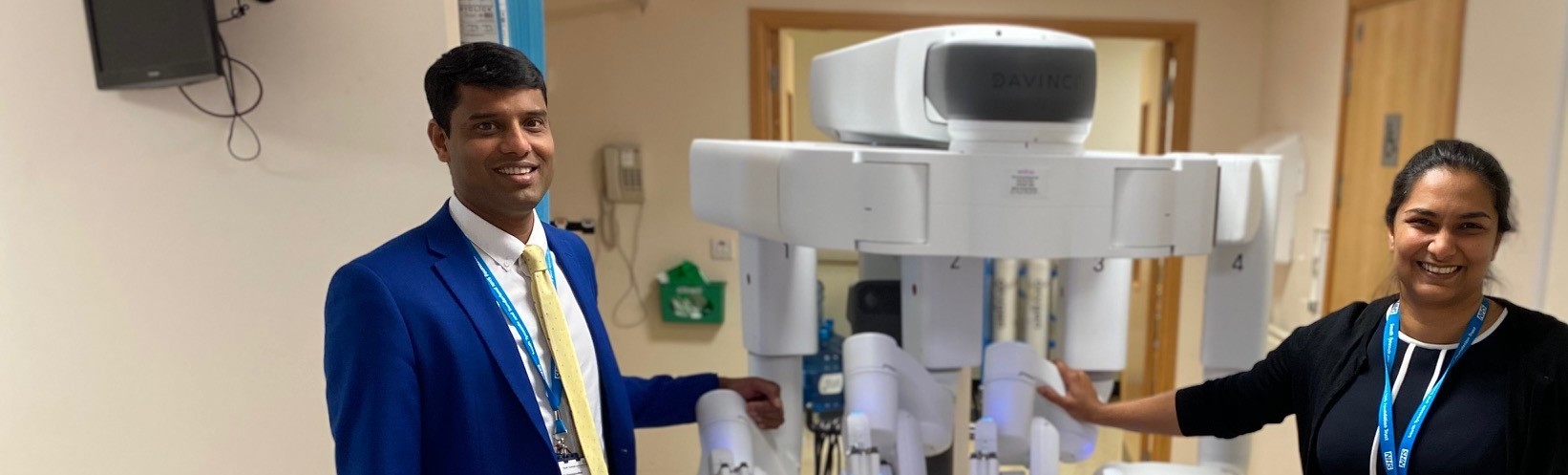
We use surgical robots to treat many of our patients. We were one of the first Trusts to use surgical robots. Using the robot, it means you will have a much faster recovery time. There is also less chance of having problems after your surgery.
Who will look after me?
A specialist team will look after you. This includes:
- Consultant surgeons
- Specialist urology nurses
- Nurses and healthcare assistants
- Physios
- Occupational therapists
They are all are experts in what they do. Together, we will agree a treatment plan.
For some conditions, our team works with other experts too. This includes cancer doctors, kidney doctors and women’s health doctors, to give you the best care.
Where will my treatment take place?
We run a rapid assessment service if need urgent help. This is at Sunderland Royal Hospital. Your GP, district nurse, paramedic or our staff in ED may send you here.
All big operations, when you need to stay in hospital, take place at Sunderland Royal Hospital. You will stay on Ward D41.
If you are having a day case procedure this may be at our Urology Treatment Centre at Sunderland Royal Hospital, or Durham Treatment Centre.
We run clinics in:
- Durham Treatment Centre
- South Tyneside District Hospital
- Sunderland Royal Hospital (Urology Treatment Centre)
For a full list of our Trust locations (click here).
Your appointment letter will let you know which location to go to.
The Urology Treatment Centre is on B level at Sunderland Royal Hospital. It has its own entrance near the main entrance off Kayll Road.
Ward D41 is on D level. Use the stairs or lift from Chester Wing or the Main Entrance.
Where can I find out more?
Our senior team in Urology
- Divisional Director – Caroline McGrath
- Associate Divisional Director - Caroline Bell
- Clinical Director - Mr Stuart McCracken
- Directorate Manager – Emma Scott
- Matron – Sam Rump
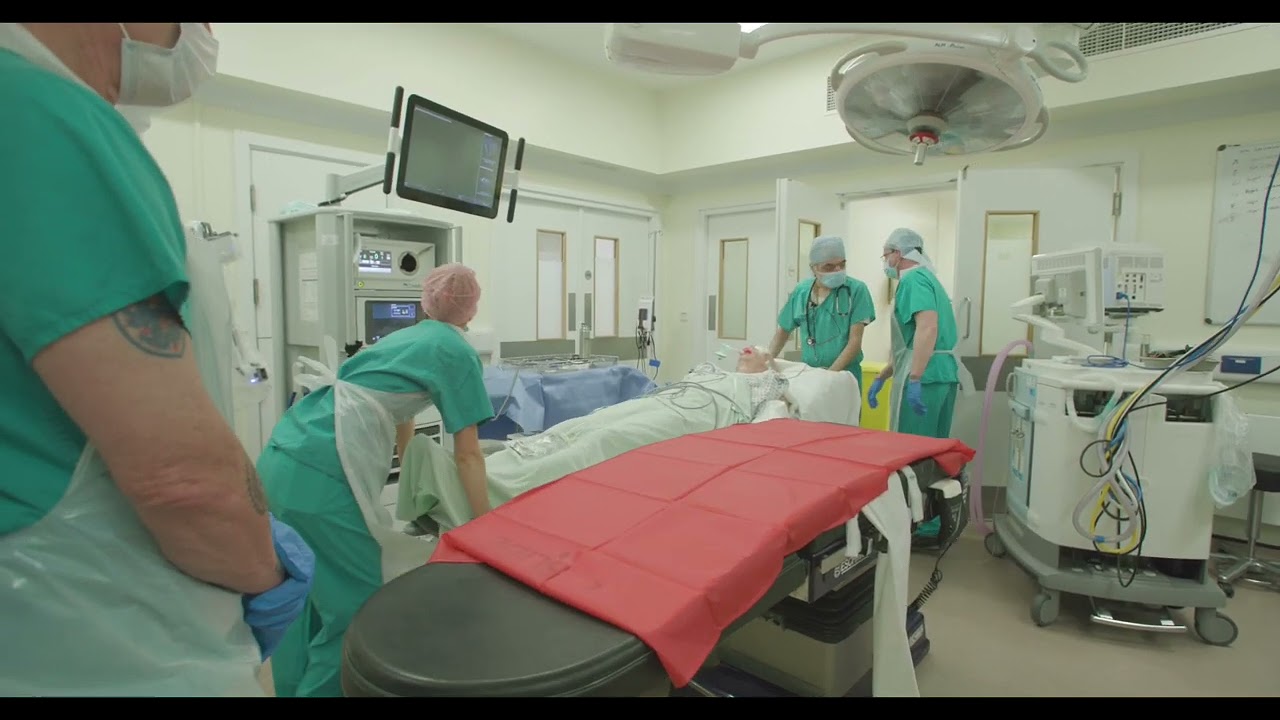
Are you having Prostate surgery?
Click on the video below to see how our theatre team will look after you.
Listen to our podcast on male cancers