This type of surgery is to do with your blood vessels. These are the arteries, which carry blood away from the heart and your veins, which bring blood back to the heart.
We are one of only three specialist centres to run this service in our region. We see and treat patients who live in South Tyneside, Sunderland and Durham.
Which conditions do we treat?
Blocked or narrowed arteries in the legs. This happens because of a build-up of fat in the arteries. This restricts blood supply to leg muscles. When this happens, it causes pain. It can also cause gangrene where the loss of blood supply causes tissue to die.
Blocked or narrowed arteries in the neck. This happens when there is a build-up of fat in your neck arteries. This restricts blood flow and there is a chance that some of the fat may break off and cause a stroke. We can clean out the artery to reduce the risk of future stroke.
Varicose veins. This is when your veins get swollen and twisted under the skin. They may feel lumpy and bulge out. They are usually on your legs. Lots of people have these and for most people they are not serious. If they are causing you problems, your GP may refer you to us.
Abdominal Aortic Aneurysms (AAA). This is when your main blood vessel, which goes from your heart to your tummy, swells up. This can be serious because there is a risk it could burst (rupture). This is most common in men. The NHS offers AAA screening to all men over the age of 64.
Amputation. This is when we need to move part of the body such as an arm or a leg. This may be because of a severe infection, or if you have gangrene. It also may be because of problems with your diabetes. We also might need to do this if you have a serious trauma or injury.
Renal access procedures. This is where we insert the tubes that patients will need for their dialysis treatment.
What type of treatment will I have?
This depends on your problem.
We work with our radiology team to use non-invasive methods when we can. This is where we use real-time images to help fix issues there and then. We call this ‘interventional radiology’. Some examples of this are below.
- We can use an angiogram to help us see where blockages are in your blood stream. This is where we use a small tube to insert dye into your blood stream. We then take pictures. When we find a problem, we can often fix it there and then.
- We also use angioplasty to help us open up blockages. This is where we use a stent to clear a blocked artery and restore blood flow. We insert a fine plastic tube, called a catheter, to do this.
- If you have varicose veins, we can do procedures to block blood flow. This should stop any pain. You will be awake during these procedures.
You will usually go home on the same day as these type of procedures. You will stay for a few hours with us first to make sure everything is ok. It is a good idea to bring an overnight bag just in case you need to stay longer.
For other things, we may need to do a bigger operation. You will need to stay in hospital for a short while to recover after surgery.
Your specialist will explain which treatment may be best for you, and the benefits and risks.
Who will look after me?
A specialist team will look after you in Vascular. This includes:
- Consultant surgeons
- Specialist vascular nurses
- Nurses and healthcare assistants
- Physios
- Podiatrists
- Occupational therapists
They are all are experts in what they do. Together, we will agree a treatment plan.
Where will my treatment take place?
All big operations, when you need to stay in hospital, take place at Sunderland Royal Hospital. You will stay on Ward C36.
If you are having a day case procedure this will be at Sunderland Royal Hospital or Durham Treatment Centre.
We run clinics in:
- Durham Treatment Centre
- University Hospital of North Durham
- South Tyneside District Hospital
- Bishop Auckland General Hospital.
For a full list of our Trust locations (click here).
Your appointment letter will let you know which location to go to.
Where can I find out more?
- Lower limb amputation - click here.
Our senior team in Vascular
-
Divisional Director – Caroline McGrath
-
Associate Divisional Director - Caroline Bell
-
Clinical Director - Mr Philip Davey
- Directorate Manager – Tammy Steven
- Matron - Sam Scott
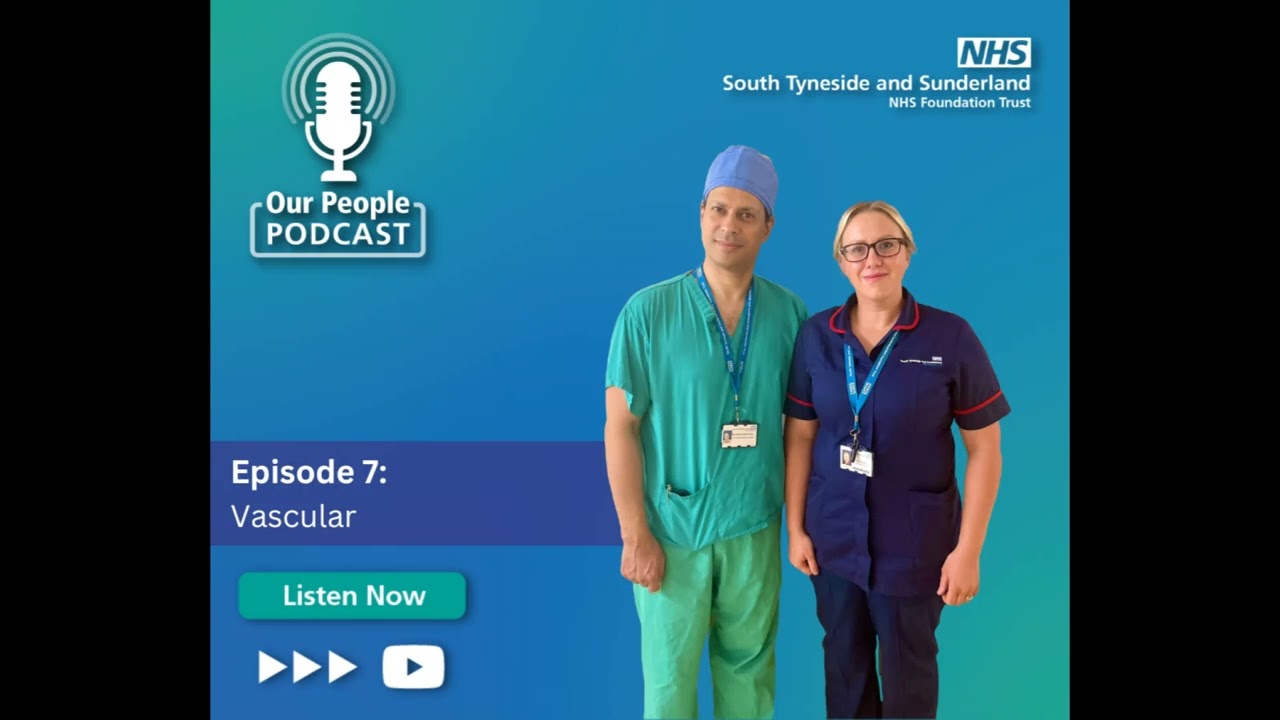
Click on the links below to listen to our podcast with our Vascular team.