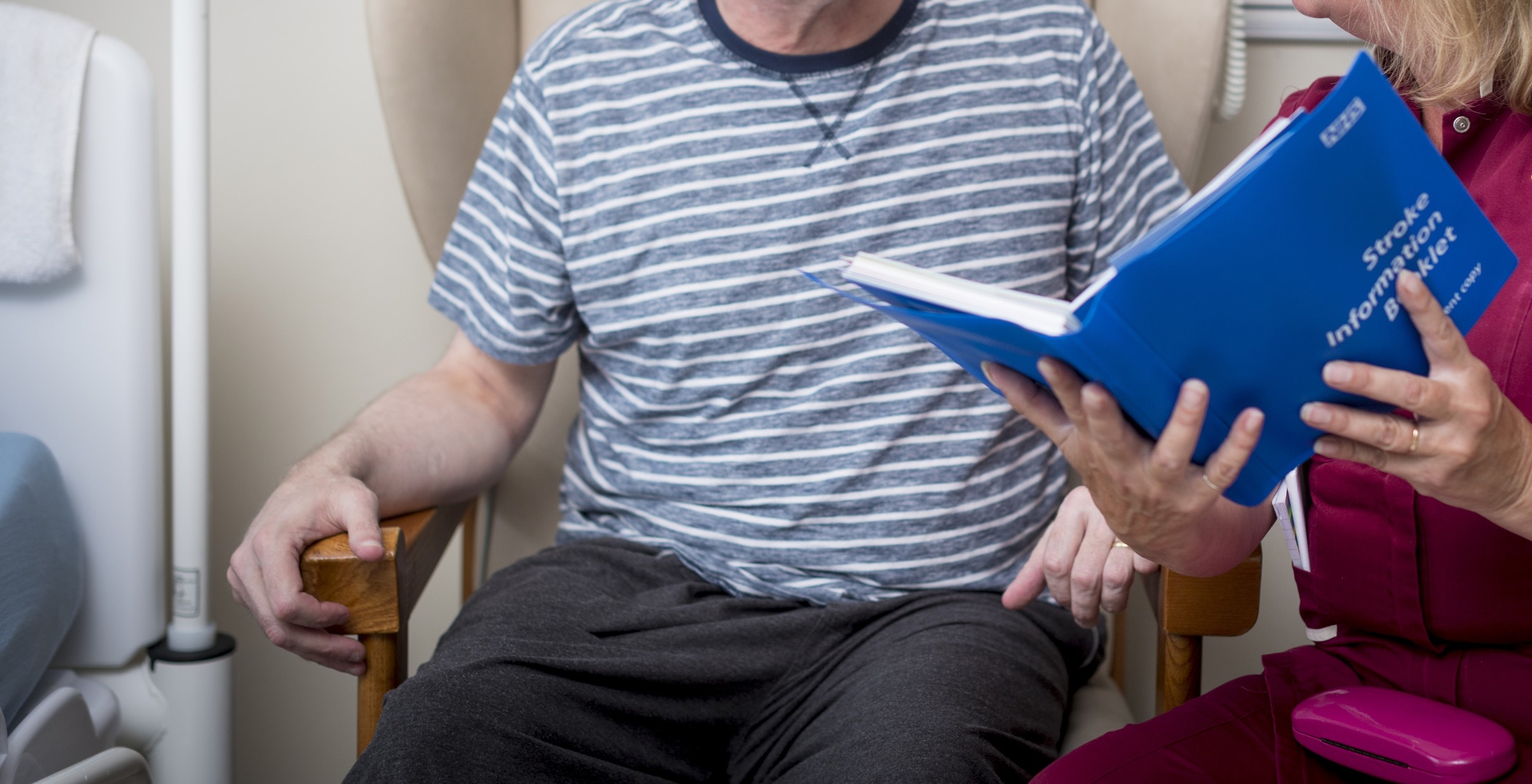
In England, one in six people will have a stroke in their lifetime. A stroke is a serious emergency and needs urgent help. It happens when blood stops flowing to part of your brain. We have a whole team of experts to look after you if you have a stroke. This page tells you everything you need to know.
To find out more about a stroke and why they happen visit Stroke - NHS.
You should always act FAST if you have any of these symptoms and call 999.
- Face weakness – one side of your face may droop (fall), and it might be hard to smile.
- Arm weakness – you may not be able to fully lift both arms and keep them there. It may feel numb or weak down one side of your body.
- Speech problems – you may slur your words or sound confused. You may also find it difficult to speak or think or words.
You may also get sudden blurred vision or loss of sight in one or both eyes.
What types of stroke can happen?
There are three types of stroke:
- Transient Ischaemic Attack (TIA) – this is a mini stroke. It happens when the blood supply to the brain gets a brief interruption. If you have a TIA, it is a warning sign of a possible stroke. The symptoms are the same as a stroke but usually go away within 24 hours. You must treat this seriously and get help.
- Ischemic stroke (clot) – this is the most common type of stroke. Around 85% of strokes in the UK are ischaemic strokes. This is when there is a blockage in the brain. This cuts off blood supply to the brain.
- Haemorrhagic stroke (bleed) – this kind of stroke happens because of a bleed in or around the brain. This happens when a blood vessel bursts. This could be inside the brain or on the surface of the brain.
There are three types of stroke:
- Transient Ischaemic Attack (TIA) – this is a mini stroke. It happens when the blood supply to the brain gets a brief interruption. If you have a TIA, it is a warning sign of a possible stroke. The symptoms are the same as a stroke but usually go away within 24 hours. You must treat this seriously and get help.
- Ischemic stroke (clot) – this is the most common type of stroke. Around 85% of strokes in the UK are ischaemic strokes. This is when there is a blockage in the brain. This cuts off blood supply to the brain.
- Haemorrhagic stroke (bleed) – this kind of stroke happens because of a bleed in or around the brain. This happens when a blood vessel bursts. This could be inside the brain or on the surface of the brain.
In hospital
If you have a stroke, we will look after you on our Acute Stoke Unit (ASU) at Sunderland Royal Hospital. Within the first 24 hours you will see lots of expert staff.
- A Physiotherapist will assess how well you can use your arms and legs.
- An Occupational Therapist (OT) will check what everyday tasks you can manage to do like making a cup of tea.
- A Speech and Language Therapist will check how well you can speak and whether you have any trouble swallowing.
- A Stroke Specialist Practitioner will assess your vision and any changes in your eyesight.
Most patients stay on the Acute Stroke Unit for at least XX hours.
Our staff will assess whether you can go straight home from the ward and what help you might need. This includes making a plan with you for your ongoing recovery at home.
If you need to stay in hospital for more rehab, this will be on our Hume Unit (D46) in Sunderland.
If we think you have had a TIA, we will see you in our TIA clinic. This will happen very quickly. We will do tests and talk to you about next steps.
At home
Our Community Stroke Rehabilitation Team will look after you when you leave hospital. They will contact you at home within two days of your discharge.
The team will help you, and your family, adjust to life after a stroke. They will give you therapy and support to help you recover in your own home.
They will also talk to you about any needs or goals you have. This includes help with your physical and mental health. We will tailor your support plan to you. This will help us to decide how many visits you need and how long your treatment will be. We will agree this plan together with you and your family.
Our stroke team has six Stroke Consultants. When you arrive at hospital you will get a named Stroke Consultant who will oversee your care. You will see lots of other different experts. This includes:
- Other medical staff
- Nursing staff
- Speech and language therapists
- Dieticians
- Physiotherapists
- Occupational therapists
- Pharmacists
Everyone is different and you will recover at your own pace.
It is hard to predict how long your recovery will take or how much rehab you will have. This depends on many things like how bad the stroke was and what your previous health was like.
Our team will support you and your family every step of the way. We will help set goals to meet your needs.
We will arrange to review you at six weeks and six months after you leave hospital. We may see you in person or talk to you over the telephone or video for your review.
The most important thing is to make sure you follow the advice of our experts. This includes any exercises or tasks we ask you to practice at home.
There are also lifestyle changes you can make to improve your health:
- Stop smoking. This is still important even if you have already had a stroke. It will reduce your risk of having another one. To access stop smoking services click on the links below:
- South Tyneside – click here
- Sunderland – click here
- Eat a healthy, balanced diet. Healthy eating is one important way to reduce your risk of having a stroke. Having too much fat, salt and sugar in your diet can increase your risk. This also includes You should also drink plenty of fluids (at least 6 to 8 glasses a day). Click here to access the NHS EatWell guide.
- Reduce how much alcohol you drink. Drinking too much increases your risk of having a stroke. Cut down on how many units you drink. Click here for NHS advice on how to do this.
Get active. Start to move more and get back to exercise. This can be a massive boost to your confidence as well as helping you stay healthy. Being active is one of the best things you can do, especially after a stroke. Click here for advice on how to do this.
Where can I find out more?
For directions to the Acute Stroke Unit at Sunderland Royal Hospital click here.
We run outpatient clinics from lots of Trust locations. You can find the details of these locations below and how to get here. Your appointment letter will let you know which location to go to.
- To insert
-
Stroke Association – click here
-
Stroke Association Online Community – click here
-
Different Strokes (helping younger stroker survivors) – click here
-
Different Strokes online exercise classes – click here
-
Carers Association – click here
-
Sunderland Carers Centre – click here
-
South Tyneside Adult Carers Service – click here
-
Carers Trust Tyne and Wear – click here
-
Age Concern South Tyneside – click here
-
Age UK Sunderland – click here
-
Brain Injury Association – click here
-
Brian and Spine Foundation – click here
-
Local mental health services – click here
-
Active Sunderland – click here
-
Healthy weight and physical activity South Tyneside – click here
Our senior team in Stroke
- Clinical Director - Dr Richard Telford
- Divisional Director - Sheena Fish
- Directorate Managers – Bev Wilkinson
- Lead Matrons – Su Lindsay and Victoria Farley