We are here to help you before you have your baby. This is called antenatal care.
I've found out I'm pregnant. What happens now?
When you find our you're pregnant, please tell your GP. You should also log your details on a system called BadgerNet. From here, we will arrange for you to see one of our community midwives.
We will send you a welcome letter and an information pack to let you know what to expect.
A community midwife will contact you to book your first appointment. This will happen when you are between 8 and 10 weeks pregnant.
Your first appointment will take place over the phone and will last up to 1 hour.
During your appointment we will ask you:
- About your medical history
- Whether you've been pregnant before
- What your exact height and weight is. Please have this information ready.
We will also talk about routine health test you will need.
After your first appointment, we will arrange a routine blood test for you. This will happen within 1 week. When you come for this test, please bring a urine sample. You can get a sample bottle from your GP. We will also check your blood pressure and do some other routine checks.
If your pregnancy is low risk, a community midwife will look after you.
We will see you at certain points throughout your pregnancy. This is to check everything is ok.
We will see you at:
- 12 weeks - for a scan. We will also do screening tests (if you want them)
- 16 weeks - for a community midwife review
- 20 weeks - for a scan
- 25 weeks - for a community midwife review. You'll also be offered a whooping cough vaccine
- 28 weeks - for a community midwife review. We'll also do blood tests
- 31 weeks - for a community midwife review
- 34 weeks - for a community midwife review
- 36 weeks - for a community midwife review
- 38 weeks - for a community midwife review
- 40 weeks - for a community midwife review
If you've been told your pregnancy is high risk, you will still have all of the same appointments that you can find under "the rest of your appointments".
We will also arrange for you to see a consultant (doctor) at certain points as well. We will do some health checks before you speak to the consultant. This will include a blood pressure check, a carbon monoxide test and a urine sample.
The consultant will then talk to you about a plan for your pregnancy and for when you give birth. You will be fully involved in this. You can ask us any questions you have.
We might also need to do more scans to keep checking everything is ok with your baby.
What tests and scans will I need?
You'll be offered some screening tests during pregnancy to try to find any health conditions that could affect you or your baby.
The tests can help you make choices about further tests and care or treatment during your pregnancy or after your baby's born. All screening tests offered by the NHS are free.
If you have questions you can talk to your Community Midwife. You can also phone the screening team on 0191 5410186.
You might find the links below useful:
- NHS - Screening tests in pregnancy - this includes a useful video
- Gov.uk Screening Information - this explains more about all of the tests on offer
- Arc UK - a national charity helping you through screening and results
You will have at least two ultrasound scans during your pregnancy.
An ultrasound is a safe scan that uses sound waves to create pictures of your baby inside your womb. It helps the midwife or doctor check how your baby is growing and developing.
Your first scan
You will have your first scan when you're between 8 and 14 weeks pregnant. This is where we give you your baby’s due date (the day we think they might be born).
Your second scan
Your second scan is more detailed and means we can check everything is ok with your baby. You will have this when you're between 19 and 22 weeks pregnant.
You can find out at this scan if you're having a girl or a boy. You don't have to - it's just if you want to.
Will I need more scans?
If you've been told your pregnancy is high risk you might need more scans. This is so that we can keep checking everything is ok with your baby.
What else should I know?
- You can bring 1 other person with you to your scan.
- Food is not allowed but you can bring a bottle of water.
- You will need to turn off your mobile phone.
- You can't take photos or videos. We will print out your scan picture for you.
- If you're younger than 16 you will need your legal guardian with you. You can also then bring 1 other person.
If you have any bleeding early in your pregnancy we are here to support you.
If this happens when you're between 7 and 14 weeks pregnant, contact your GP or speak to your community midwife. They will arrange for a scan at our Early Pregnancy Assessment Unit (EPAU) to check everything is ok.
If this bleeding is heavy and you feel unwell, this could be more serious. You should go to your the nearest Emergency Department as soon as possible.
What antenatal classes I can go to?
This class will cover:
- Labour (giving birth)
- Pain relief (medications that can help with pain)
- Active birth (moving around during labour to have your baby in a position that you are comfortable)
- Water birth (having your baby in the water)
They take place:
- Every other Tuesday
- Between 6pm and 8pm
Call 0191 404 1031 to find out more or to book.
This class will cover:
- Bonding with your baby
- The benefits of skin-to-skin contact
- Breast feeding
- Bottle feeding
They take place:
- Every other Tuesday
- Between 6pm and 8pm
Call 0191 404 1031 to find out more or to book.
We have some online antenatal class videos. Click the links below to watch:
- Health in pregnancy
- Preparing for labour and delivery
- Water birth and active birth
- Postnatal care and the newborn
If you need to watch these videos in another language follow these instructions:
- Click the link to take you to the video
- Click on the settings icon
- Select Subtitles/CC
- Select Auto Translate
- Choose the language you want
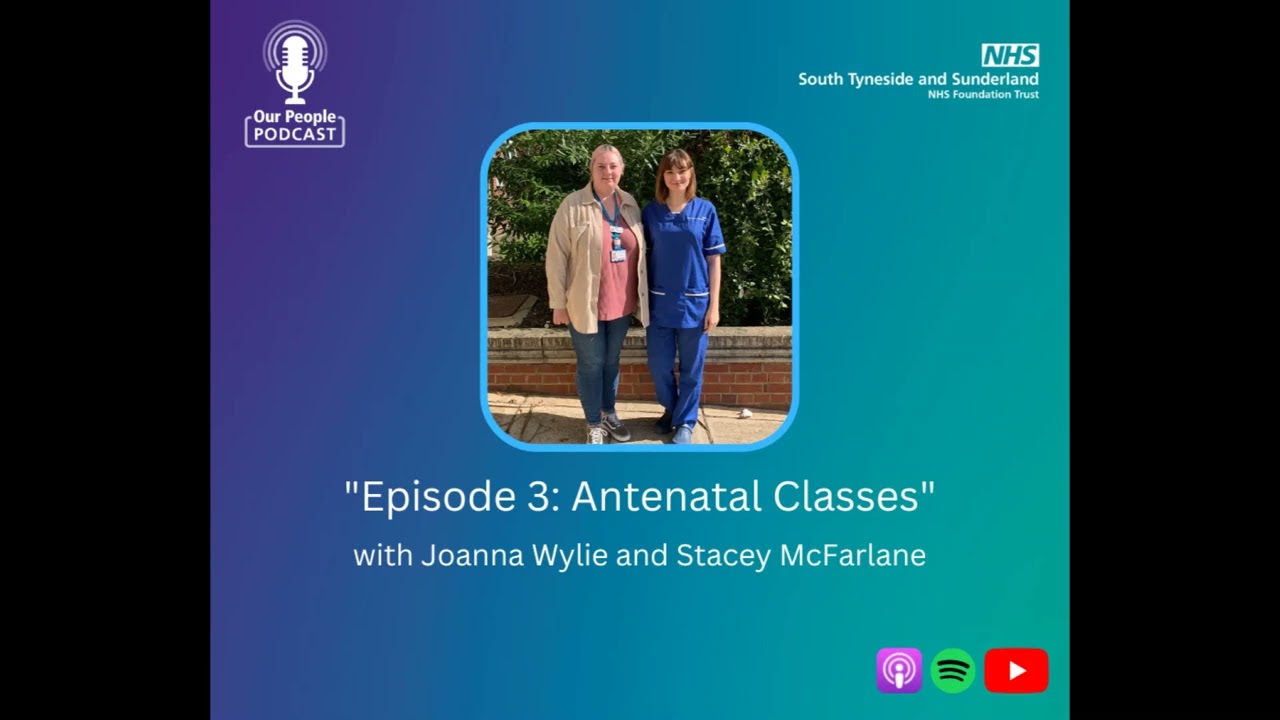
Find out more about antenatal classes by listening to the Our People Podcast episode below:
What else should I know?
Feeling your baby move is a sign that they are well.
It is not true that babies move less toward the end of pregnancy. You should feel your baby move right up to the time you go into labour and while you are in labour too.
Take time to get to know your baby’s normal pattern of movement.
When should I start to feel my baby move?
You should start to feel your baby move when you're around 16-24 weeks pregnant.
This might feel like a kick or a flutter. Some people describe it like a swish or a roll.
It might feel different as you move through your pregnancy. This is normal.
How often will your baby move?
There is no set number of normal movements. Your baby will have its own pattern.
You should feel your baby move more and more up until 32 weeks. It will then stay roughly the same until you give birth.
What should you do if you are worried about your baby’s movements?
If you think your baby’s movements have slowed down, changed or stopped, please let us know as soon as possible. You should contact your community midwife or call any of the numbers below:
- South Tyneside Antenatal Unit - 0191 404 1031
- Sunderland Antenatal Unit - 0191 569 9181
- Delivery suite at Sunderland Royal Hospital – 0191 569 9777
We are here to help 24 hours a day, 7 days a week. You should never put off getting in touch with us if you are worried.
Please don’t use home hand-held Dopplers or phone apps to check your baby’s heartbeat. Please telephone us and get checked over. We will arrange to see you as soon as possible.
What if I notice my baby’s movements reduce after my check up?
Please ring us back as soon as possible. You should still ring us even if everything was normal last time we saw you.
Reduced movements can sometimes be the first sign that something is wrong. Over half of women who have had a stillbirth notice that their baby’s movements slow down or stop.
A healthy diet is an important part of a healthy lifestyle at any time but is especially vital if you're pregnant. Eating healthily during pregnancy will help your baby to develop and grow.
What food should I eat when I'm pregnant?
You don't need to spend lots of money or go on a special diet. You just need a balance of the right types of food. These include:
- Fruit and vegetables
- Starchy foods like bread, potatoes, cereals, rice, pasta and noodles
- Protein foods like fish, chicken, beans and nuts
- Eggs. You can safely eat raw or lightly cooked hen eggs (as long as they have the British Lion stamp)
- Dairy products like milk, cheese and yogurt
What should I avoid?
There are certain foods that you should avoid while you're pregnant. This is because they can put your baby's health at risk. These include some types of cheese and raw or under-cooked meat. You can find out more here.
Do I have to eat for two when pregnant?
No – this is a myth! You might feel more hungry than usual, but even if you are expecting twins, you don't need to eat extra portions. If you eat the right types of food this should help you feel fuller for longer.
In the final three months of your pregnancy, you'll need an extra 200 calories a day. This is the same as two slices of bread and margarine.
Can I get financial help with food costs?
Yes. If you are more than 10 weeks pregnant and receive benefits, you can get help to buy healthy food, milk and vitamins. You can find out more and apply here.
Smoking is not good for you or your unborn baby.
Giving up can be hard, but if you're pregnant, now is definitely the time to get help.
We are here to support you and give you the treatment you need to help with your addiction. Please ask your GP or community midwife for help as soon as possible.
Why is smoking harmful to my baby?
When you smoke, all of the harmful toxins that you breathe in also go into your baby's body. It means your baby will struggle for oxygen. This affects how they grow and develop.
If you smoke when you are pregnant, you will increase the risk of losing your baby. There will be more chance of you going into labour prematurely. You will also increase the risk of your baby being born with health problems.
Stopping smoking is the best thing you can do for you and your baby. You can find out more here.
Will you ask me if I smoke?
Yes. This is one of the first things we will ask you about. We will also want to know if anyone else in your house smokes. This is so we can support you and your family to stop smoking as early as possible.
We will give you all the help and support you need.
I'm a smoker, what should I do?
The best thing you can do is to stop completely – not just cut down. There is no safe level of smoking, either for you or your baby.
To help you with this, your midwife can refer you to services that will help you. The earlier that you stop, the bigger the benefit will be to you and your baby.
If you stop smoking before 15 weeks, this means there is less chance of having your baby early.
I don’t smoke but others around me do – is my baby still at risk?
Yes. If you breathe in other people’s smoke this can also harm your baby. This is passive smoking. It also increases the risk of losing your baby.
If you live with someone who smokes it means there will be more chance of you going into labour early. It also increases the risk of your baby being born with health problems.
You should ask people to smoke outside of the house and not anywhere near you or your baby. This includes in the car. You should also try to keep away from places where people are smoking.
If you live with someone who is a smoker, they can be referred to a specialist stop smoking support team.
Doing some gentle exercise when you are pregnant is good (and safe) for you and your baby. It will help you stay a healthy weight and help prepare your body for labour.
If you are used to doing regular exercise, you should keep it up. You should do what feels comfortable for your body but don’t push yourself too much.
If you're not used to exercising, or haven’t done any for a while, it’s a good time to start. Try and do 10 or 20 minutes a day. Exercise has lots of benefits for pregnant people.
No matter what your fitness level is, you should always listen to your own body. Do what feels right for you. You should be able to talk to someone while you are doing exercise. If you can't manage this, you need to slow down.
Which types of exercise can I do?
There are lots of types of exercise that you can enjoy whileyou're pregnant. This includes:
- Walking
- Swimming
- Jogging
- Running
- Yoga
- Aerobics classes
- Pelvic floor exercises
There are also some types of exercise that you should avoid. This includes things like team sports and more extreme sports. You can find out more here.
Whatever you do, make sure you warm up before and cool down afterwards. You should also drink plenty of water.