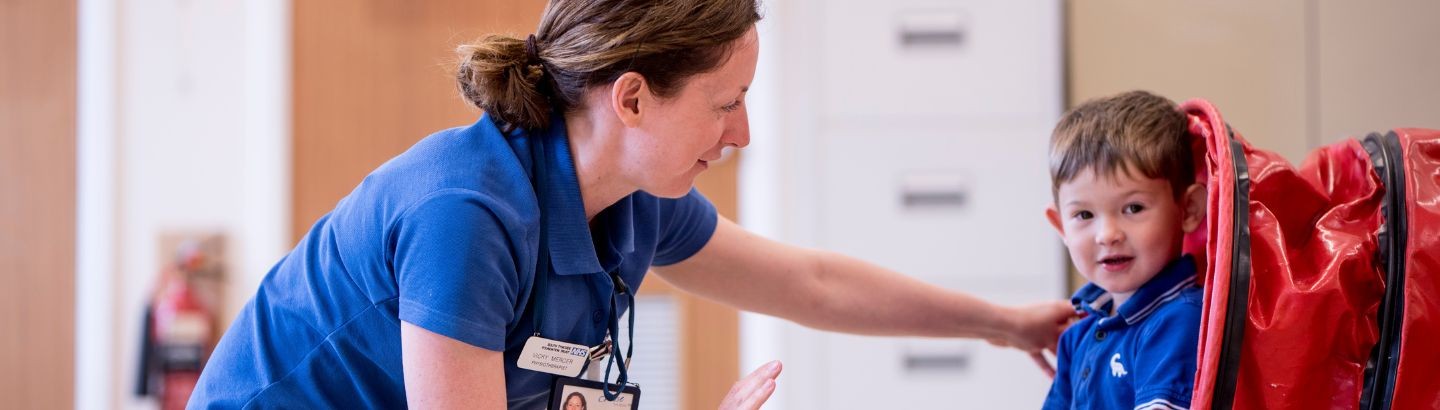
Paediatric physiotherapists help children and young people move better and feel less pain.
A physiotherapist is a trained professional who helps patients improve their strength, balance, and movement.
We assess and treat children from birth to 18 years old (or until they leave special school aged 19).
We provide care in a hospital setting but also in the community in places like schools, colleges and homes.
Physiotherapists use different methods to help children get better. Things like:
- Helping with movement and development
- Treating injuries
- Supporting long term conditions
- Helping after a surgery or illness
- Providing advice and support
What conditions do we support?
Developmental and neurological disorders are conditions that affect how a child’s brain and nervous system grow and function.
These conditions can change the way a child moves, learns, communicates, behaves, or interacts with others.
They include:
- Gait problems like toe walking (when a child walks on the ball of their feet) or in-toeing (when a child's feet point inwards when walking)
- Cerebral Palsy - a lifelong condition caused by damage to a developing brain
- Developmental delays - when a child is slower than expected to do things like walking, talking
- Head injuries
- Learning disabilities with physical disabilities
- Infections of the brain, spinal column and peripheral nerves
- Erbs palsy - a weakness or paralysis of the arm caused by damage to nerves in the shoulder
- Genetic/chromosomal disorders - these conditions happen when there is a change in a child’s genes or chromosomes,
- Developmental co-ordination difficulties like Dyspraxia (a condition that affects how the brain plans and coordinates movement)
Congenital abnormalities (also called congenital conditions or birth defects) are health problems that a baby is born with.They happen before birth, while the baby is still developing in the womb.
These abnormalities can affect how a baby’s body, organs, or brain form and function.
They include:
- Talipes - a condition where a baby is born with one or both feet in the wrong position.
- Congenital dislocation of the hip - this happens when a baby’s hip joint does not form properly.
- Arthrogryposis - a condition where a baby is born with very stiff joints and weak or tight muscles.
- Spina Bifida - a condition that happens when the spine and spinal cord do not form completely before birth.
- Hydrocephalus - this is when too much cerebrospinal fluid builds up around the brain
- Congenital limb deficiencies - these are differences in the way a baby’s arms or legs develop before birth.
Bone, joint and muscle disorders include:
- Muscular dystrophies - a group of genetic conditions that cause muscles to become weaker over time
- Torticollis - this happens when a baby’s neck muscles are tight or shorter on one side.
- Plagiocephaly - this is when a baby’s head becomes flat on one side.
- Juvenile idiopathic arthritis - this is a condition where the body’s immune system causes inflammation in muscles or joints.
- Epidermolysis Bullosa - this is a rare genetic condition where the skin is extremely fragile.
- Perthes - this happens when the blood supply to the hip joint is temporarily reduced.
Where can I find out more?
You can find us at:
- The Children's Centre in Sunderland
- Palmer Community Hospital in Jarrow
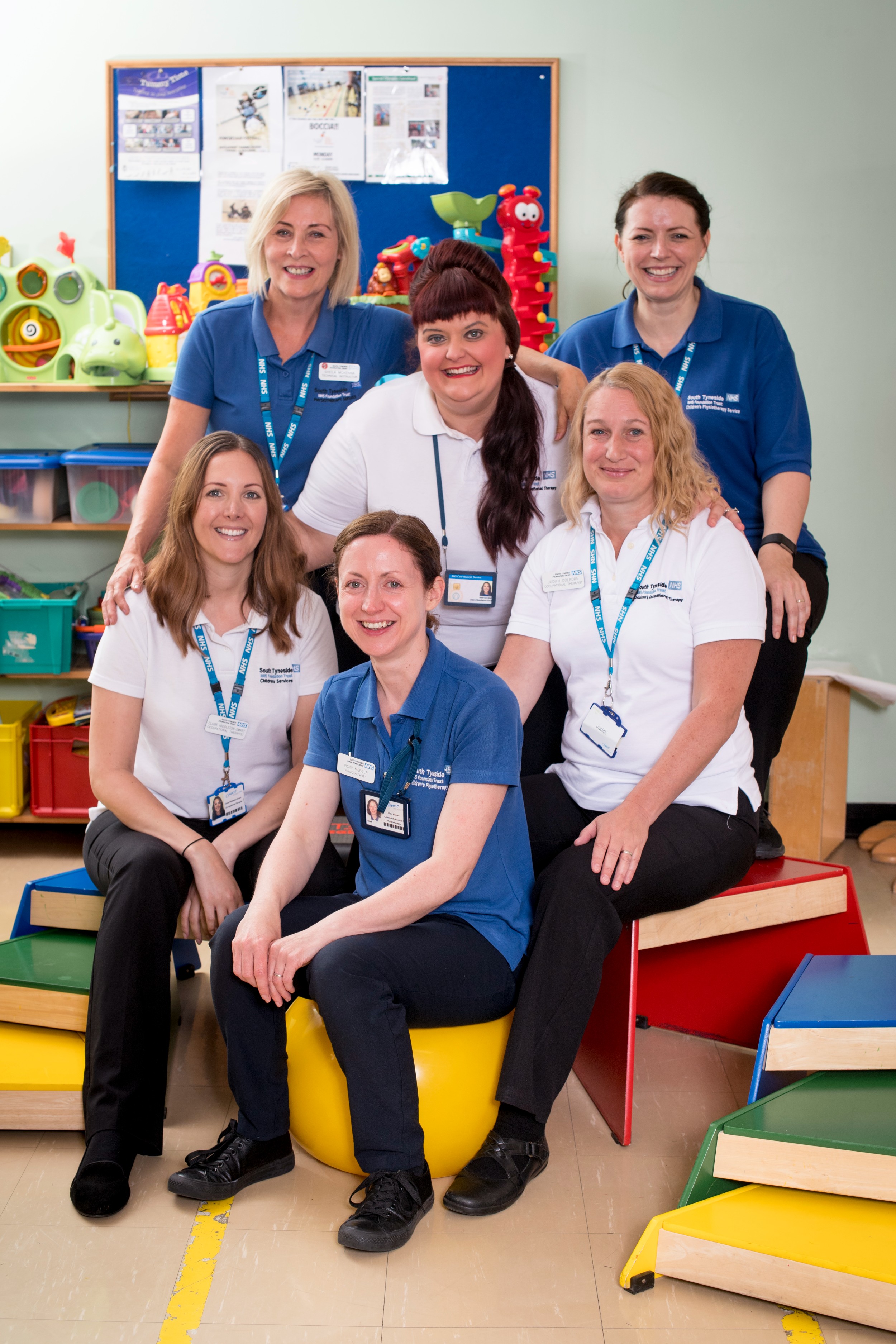
Our senior team in Children's Physiotherapy
- Divisional Director - Claire McManus
- Directorate Manager - Derek Curry
- Matron - Laura Hayden-Duck